Category: conservation

  • Reflections on human behaviour and marine turtles

    Reflections on human behaviour and marine turtles

    This month I volunteered for the protection of loggerhead turtles (Caretta caretta) in Greece for 3 weeks. Here are my reflections on conservation, human behaviour and behavioural design.

    There was a lot of tourist activity and infrastructure on the 5 turtle nesting beaches in the south Peloponnese, where I worked. Humans pose problems for sea turtles, but now they can actually be the solution!

    Let´s look at the whole system and nail down some of the key threats to their survival:

    Lights from restaurants and hotels during the night

    Most local businesses do not turn off their lights during the night and some can be very bright. Emerging baby turtles get disoriented and sometimes follow the opposite direction, heading into town instead of the sea. This threat can be mitigated with “shading”, an installation with mostly natural materials to prevent hatchlings from going towards the lights and guide them to the sea instead.


    Article content
    Finishing a “shading” installation to protect hatchlings from disorientation due to artificial light

    Stray and semi-stray dogs

    I call them semi-stray, because these are dogs that run around and hang out regularly at a place, but they do not belong to anyone. Unfortunately, these are the most common case of strays. Even if some locals feed them and give them names – they tend to deny any responsibility: “this is not my dog”. Stray dogs run around unconstrained, they dig out nests and destroy turtle eggs. Luckily, the metal grid that you see in the photograph above, protects turtle nests from curious dogs, stray or not. It allows baby turtles to come out, but prevents digging. However, it does not protect the babies from being eaten at night by a dog, at the exact moment they come out (apparently this happens despite the fact that the semi-stray dogs have already been fed earlier!).

    Foxes and other wild animals

    Foxes are smarter predators than dogs. If nests can be protected with a grid installation, then most dogs are no longer a threat (at least for the eggs). But foxes often do figure out a way to dig and get the eggs – sometimes under the grid. They also seem to be checking all the nests regularly one by one – based on the tracks they leave at night! In other locations, wild boar are the strongest predator– no nest protection design can defer them, because they just throw the grid away with their tusks. But here they are less common and pose less of a threat, mostly appearing in wild beaches and areas without any human activity.

    Beach equipment: sunbeds, surf boards, boats and so on

    People tend to leave all sorts of stuff on the beach overnight and they become obstacles for baby turtles, when they emerge from the sand and try to reach the sea. Also such obstacles can prevent mother turtles from laying their eggs in the first place.

    Some business owners pack their sunbeds during the night, keep dogs inside – but others do not. Expensive resort owners have installed some rather heavy sunbed installations that cannot be moved at all during the season. Everybody has been informed about the required policies, their obligations that come with running a tourist facility in a Natura 2000 protected area. Those include removing and stacking sunbeds, tables, chairs and umbrellas from the nesting zone for the night. Therefore, “awareness” or “education” is not what is missing here. Those who do not change their practices, feel no pressure to do so. Like in so many places around the world, there is no local law enforcement – the only government office is far too far away and under-resourced.

    Article content

    So what are the motivating drivers of those who do change?

    Here are some for you to reflect upon:

    • A sense of pride for having these rare sea turtles in their back yard…
    • Wanting to be perceived as a responsible and sustainable business…
    • Feeling responsible for protecting the environment they operate in, it´s their future after all…

    If you were about to design a new program, how would you apply these drivers to create a behaviour change strategy?

    Humans are the solution. Here is why.

    Surprisingly, predation is so high on wild beaches – where many displaced wild animals find their way to feed on the nests – that hardly any baby turtles even make it to sea to start their journey. Many of us have this image in our minds – from nature documentaries – of baby turtles emerging from the sand en mass in the wild, all at once, while being preyed upon by seagulls and other animals. But this phenomenon is actually quite rare! What normally happens is that a few turtles come out from a nest on one night (it could be just one or it could be 10, it really depends) and then they keep coming out on the following nights, for about a week. As they tend to emerge in small numbers, it is easier for predators to pick them up, before they make it to the sea.

    But near local communities, beaches have more tourists, but less wild animals preying on turtle eggs and hatchlings. So baby turtles can actually have a better chance of survival near people – but with the right measures in place and the right attitude. So there is an opportunity for greater impact, if more business owners and tourists adopt a caring mindset and a sense of responsibility towards these precious animals.

    In the field of conservation, behaviour change is associated primarily with communication campaigns.Communication campaigns alone however, are not enough to shift mindsets towards conservation. Studies have shown that social marketing has a success rate of up to about 7% in influencing people´s behaviour – for example in the case of wildlife trade. In other areas, healthcare in particular, we find more advanced examples of behavioural design – tools and services that support and guide people in making better choices. My volunteering experience presented an interesting case study for designing alternative interventions.

    What if your behaviour change strategy was more than a communication campaign? What would it be?

    Do you have any program design examples that encouraged local business owners to change existing habits and adopt new practices for environmental conservation? (e.g. like in this case, removing beach equipment in the evening, reducing light pollution and keeping dogs inside or on a leash during the night). What worked well? Do you know of any failures? We need to learn from failures too!

    Article content
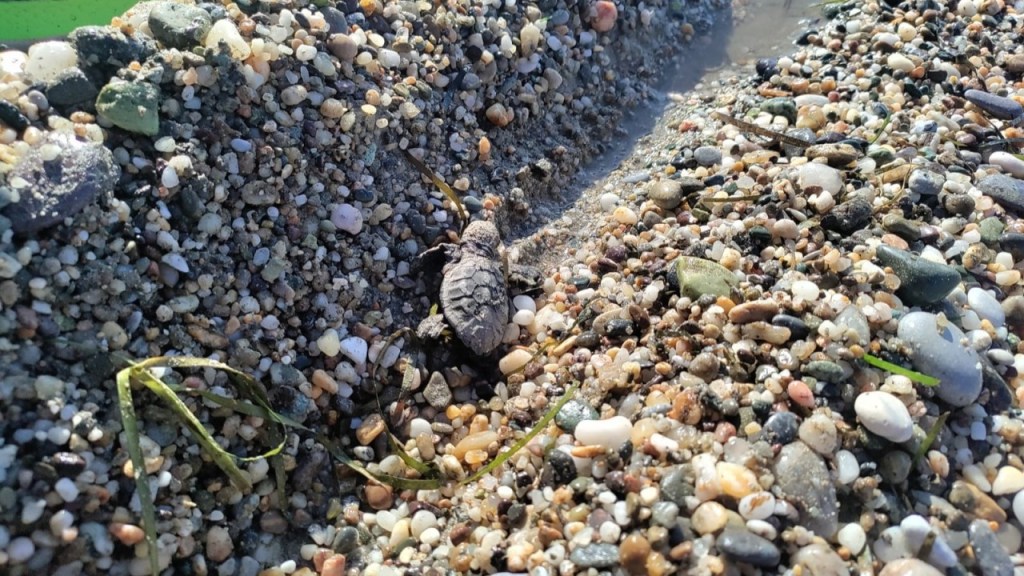
    A hatchling that just made it to sea…

    This short article was originally published on LinkedIn on 25/09/2024
  • What are the key ingredients for sustainable change when engaging communities in ecosystem conservation?

    What are the key ingredients for sustainable change when engaging communities in ecosystem conservation?

    I sought answers to this question through a series of interviews with field experts who work at the forefront of conservation with local communities across the Global South, often in challenging socio-cultural contexts. These best practices emerged from our conversations:

    1. Engage local communities and understand their needs before starting the project.

    Before any conservation project takes off, it is essential to connect with local communities and truly understand their needs. When conservation interventions are designed without their input – even with the best intentions and community benefits in mind – they are more likely to fail. Responses to proposed changes can be quite unpredictable and good ideas fail in field implementation, if they do not involve communities in the planning phase. Imagine an NGO introducing coconut farming and not seeing much adoption, to later discover that the particular community is instead interested in developing a business around baked goods. Such examples are, unfortunately, quite common. Sharing initial ideas on interventions and opportunities with community leaders can uncover potential barriers before they obstruct progress.

    A starting point for any intervention should be:

    “What is really important to this particular community?”

    Livelihood is a top priority. In cases of human-wildlife conflict people need to secure their means of living—imagine their farm having been trampled by elephants. Educational efforts are futile if basic needs are not met first. Alternative livelihood initiatives are sustainable only if the participating families are motivated and willing to invest significant time and effort. Various factors influence people’s decision-making when confronted with the choice of a different crop, adopting more environmentally-friendly farming techniques, or a completely new livelihood activity. One of the most influential factors is the perceived economic benefit. It is crucial to understand the community’s perception of any planned intervention. During initial community engagement it is essential to identify members with the right attitude, skills and resources to undertake a new livelihood activity.

    When aiming for behaviour change, for example to encourage farmers to adopt more sustainable agricultural practices, it is important to understand what drives current behaviours and what hinders change (e.g. loss aversion, lack of trust, perceived social norms etc). Knowing a particular community’s needs and behaviours lays the foundation for effective conservation activities.

    2. Power-shifting and trust building are essential ingredients for change.

    Adopting a low profile when engaging with local communities is very important, though not always straightforward. Economic and educational gaps are prominent: locals often see conservationists as “the scientists who think they know it all and have come to educate us” or simply “the rich people from the city”, leading to initial mistrust. To bridge this gap, show respect, avoid speaking from an educator’s or scientist’s position of superiority. Refrain from trying to change any beliefs and practices. Instead, work collaboratively to incorporate their ways into the conservation project. Communities have co-existed with wildlife and share experiential knowledge of animals, their behaviour and daily routines. For example, they might know where elephants can be located at different times of the day and how they move through their land. Some communities have unique skills, like the indigenous Xikrin community in Brazil, who can navigate their dense forests like no one else. The Xikrin are able to detect human presence from campfire leftovers —  even deep in the forest —  so they can help with monitoring activities, to protect the forest from illegal logging and mining. When approaching communities for a conservation project, respecting and integrating their knowledge can make all the difference.

    In one case, a conservation team faced initial scepticism when the locals thought they are only interested in their studies for their master’s thesis. To overcome this, finding a person who the community trusts to endorse the project was what made it happen. Depending on the context, the best people to approach might be the elders of the community, spiritual or religious leaders. This approach has also been described as “Conservation Evangelism”: engaging a religious authority that people will listen to and take as a source of truth.


    Article content
    A waterbird survey at Oyorokoto fishing settlement, in Andoni, Local Government Area, Rivers State, Nigeria. Photo Credits to Nigerian Conservation Foundation (NCF) and Save Andoni Forest Elephant Initiative (Safe-i)

    Another notable example involves gaining the community’s attention through action: a conservation team from Sustainable Actions for Nature in Nigeria started by cleaning a beach. It was this action, rather than flyers or other environmental awareness materials that had impact:

    “Why are these people – who are not from here – cleaning the beach?”

    Curiosity led to trust as people saw the tangible benefits of a clean environment. Maintaining the power shift throughout the project is vital. For example, when delivering trainings, rather than a top-down approach, the workshop style should make people feel that:

    “We are sharing knowledge together.”

    When moments of friction arise, conservationists should present the issue to the community and enable them to solve it, without assigning blame or assuming a position of power.

    3.  Social inclusion and bringing information to life.

    Involving women and children in community meetings – especially when these usually only happen among a group of men or elders – increases inclusion and engagement with the project. The meeting then becomes “an event, where everyone is invited to attend”.

    Children in particular are often curious and open to new learnings. By gaining knowledge, connecting with nature and wildlife, they can help activate much needed behavioural changes within their families: “My dad brought an impala and I told him that it was wrong!”

    Overcoming linguistic, literacy, and other communication barriers is crucial when running activities in remote and culturally diverse communities. Visual materials, videos, and storytelling in the local language are powerful means to explain key concepts about wildlife behavior and ecosystem conservation. Role play can take this a step further. In Uganda, there are many venomous snakes and a common behavioural barrier is people’s tendency to throw stones and try to kill a snake at sight – resulting in numerous snake bites and deaths. To discourage this behaviour, the Herp Fauna Foundation runs demo sessions in communities, showing how to stay calm and move away from a snake to avoid getting bitten. Seeing how differently a snake behaves when it is not threatened, leaves a lasting impression in people’s minds. Being able to experience a non-venomous snake close-by, can bring empathy and regret: “This is so bad, we have been killing this poor snake all this time and it is not venomous!”

    Article content
    Demonstration with a live snake. Photo Credit to the Herp Fauna Foundation, Uganda

    Poorly designed information materials can hinder behaviour change projects. In Nepal, Greenhood researchers found that rural communities struggled to understand new laws protecting medicinal plants. Some plant harvesters were unaware that the law applied to them, as they used a different name for a plant in their local language. Elderly harvesters (70-75 years old) found it hard to grasp how a practice that sustained them for most of their life could now be illegal. The team also discovered a monitoring gap: law enforcement officers had difficulties in identifying the plants during border inspections, because their manuals lacked sufficient photographs and practical information. It turned out that dried orchids in processed form looked very similar to potato plants! This case highlights the importance of community-specific awareness strategies and the need to test training materials with users to resolve ambiguities and improve comprehension through user feedback.

    Article content
    Reshu Bashyal & the Greenhood Nepal team along with the local community in Panchase. Panchase is also referred to as “orchid paradise of Nepal”, where local NGOs are working together with local communities to conserve orchids in the wild. Photo Credit: Greenhood Nepal.

    4.  Consider the impact of local culture, customs and beliefs.

    Sometimes cultural beliefs and behaviours might hinder or delay the progress of a community program. Programs designed with a Western mindset often fail to anticipate potential socio-cultural barriers. Early cultural immersion, community engagement and participatory design can help mitigate such risks.

    Cultural insights can guide better program design. In Africa, the long-held totem system has contributed to species and ecosystem diversity. Every person has a totem, represented by an animal which is considered sacred. One can never harm or eat their totem animal, which in the past ensured that some groups would not hunt particular animals – a kind of spiritual approach to conservation. Nowadays, conservationists can use totems creatively, for example by engaging leaders with specific endangered animals as totems to promote species protection. Cultural connections like this can boost environmental awareness, especially where communities are detached from nature and wildlife protection is limited.

    Another example comes from a project aiming to provide a sustainable livelihood for the Xikrin, an indigenous community harvesting Brazil nuts. The community lives in an indigenous territory in the state of Pará in Brazil that has been the target of intense deforestation, and illegal mining. The Xikrin associate the concept of “ownership” with “nurturing something”. When harvested nuts had to be kept in a village storage facility (the ‘paiol’) prior to transportation, some community members would still take out nuts, despite the fact that the nuts had already been sold. This completely new model of storage and trade was hard to grasp and community meetings were necessary to address the confusion:

    “If these nuts are no longer ours, then why are we taking care of them?”

    Concepts that we take for granted can be interpreted in unexpected ways. Working with communities to figure out details can smooth such complex transitions.

    5.  Monitor progress & give feedback during and after the project.

    Conservation interventions require time to assess their impact, often spanning over years. This might not align with the monitoring and evaluation (M&E) metrics and timeframes required for reporting purposes. But to achieve real impact, it is essential to revisit the communities, assess progress and provide feedback – even after the end of a project:

    “People need to feel that you are interested in their progress. That you actually care about their well-being”.

    “Showing up again” makes a difference – especially for awareness programs that tend to run as one-off engagements due to limited funds.

    Successful community conservation programs require sustained effort and long timeframes. A participatory design approach to conservation from the very beginning, co-creating programs to protect and restore ecosystems together with local communities, can help remove some of the barriers and hurdles that lie ahead.


    Acknowledgements

    I would like to express my gratitude to the following experts who generously shared stories from the field and their valuable reflections:

    Jucimara Cavalcante, Research, Anthropology, Environmental sustainability

    Emmanuel Mukasa, CEO, Herp Fauna Foundation

    Vimbainashe (Nicky) Chitauro, Conservationist, Founder & Exec. Director WildEd.Zim

    Reshu Bashyal, Research Fellow, Greenhood Nepal

    Grace Alawa, Founder Sustainable Actions for Nature

    Kate Tointon, Communications Executive – Conservation Leadership Programme (CLP) at Fauna & Flora


    Curious to learn how participatory design and co-creation techniques can be applied to community conservation?

    Reach out to explore innovative approaches to community programming: yanna@designfollowsinsight.com

    Article content
    Visual materials prepared for a co-design workshop with farmers for an innovative agricultural program in Syria. Photo Credit to the Airbel Impact Lab, IRC

    This article was published on WildHub: https://wildhub.community/posts/designing-community-programs-for-conservation